Separation Anxiety in Dogs: Symptoms, Causes and What Actually Helps
How to recognize separation anxiety in your dog, what triggers it and what actually helps. From early signs to training and professional support.
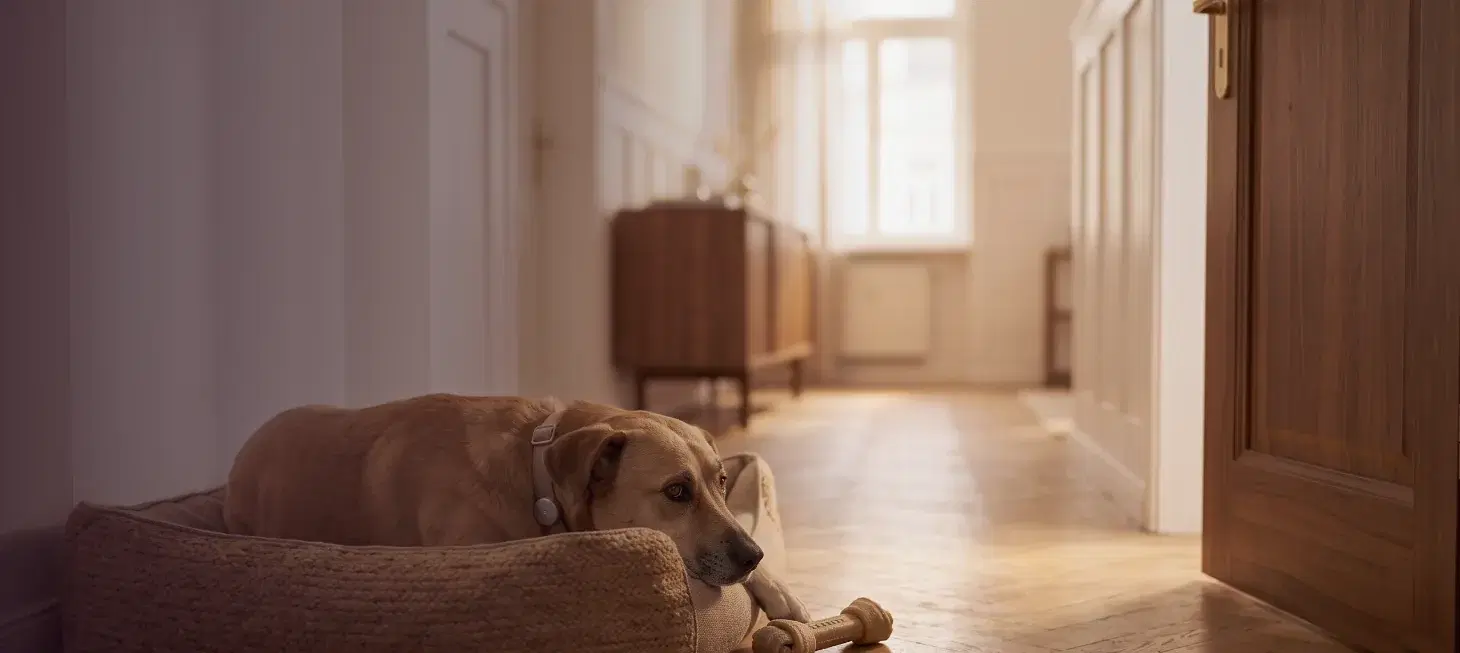
The door clicks shut and before you even reach the stairs, you hear it: the first whimper. For the rest of the day you wonder whether your dog's mood has improved or gotten worse.
Many dog owners know this feeling. It is not your imagination and it is not a sign that you are doing something wrong. It is at the heart of one of the most common behavioral issues in dogs, and this article walks step by step through how to recognize separation anxiety, what triggers it and what actually helps.
What is separation anxiety in dogs and how do I recognize it?
Separation anxiety is a genuine stress reaction to being alone, not misbehavior and not revenge. It usually shows up within the first 30 minutes after you leave and often comes with restlessness, vocalizing or destruction.
Not every behavior while alone is separation anxiety. Boredom can look similar at first glance. A dog might chew something simply because it is bored, for example. The difference lies in the pattern. Separation anxiety typically begins shortly after you leave and is tied to being alone itself, regardless of how much the dog was exercised beforehand. Boredom tends to show up spread across the whole day and often improves with more activity. A lack of routine can look similar too, but often resolves with more structure in the daily schedule.
Another difference lies in the intensity. A bored dog can usually be settled with a toy. A dog with genuine separation anxiety often stays tense even when it has something to do, because the problem is not a lack of distraction but the absence of its person. This distinction matters, because the solution is different in each case. More activity helps with boredom, but does little for genuine separation anxiety.
How do I recognize separation anxiety in my dog?
The signs of separation anxiety almost always appear when no one is watching, and that is exactly what makes it so hard to assess.
- Barking, whimpering or howling that begins shortly after you leave, often within the first 30 minutes
- Destruction near doors or windows, more rarely in other parts of the home
- Pacing back and forth or general restlessness, sometimes lasting the entire absence
- Accidents indoors, even though the dog is house-trained and otherwise reliable
- Refusing food or treats while alone, even in dogs that usually eat reliably
- Excessive drooling or panting without any physical exertion
These behaviors happen almost exclusively while you are away. That means most owners only see the aftermath, chewed door frames, a puddle, but not the actual course of events. And that is exactly what makes it hard to gauge how serious the situation really is. Many trainers therefore recommend recording the first 30 to 60 minutes after you leave once, with a simple camera or app, just to see when the restlessness begins and how long it lasts.
See how Voicari makes separation anxiety visible
What causes separation anxiety in dogs?
Why does it affect one dog and not another? Separation anxiety rarely stems from a single cause. Common triggers include:
- a sudden change in routine, for example when working hours shift or someone returns to the office after a stretch of working from home
- a move or a new living situation
- being rehomed from a shelter or from previous owners
- an especially close bond with a single person
- too little practice being alone during puppyhood
None of these triggers automatically means a dog will be affected forever. But they explain why some dogs are more susceptible than others, and why separation anxiety sometimes only appears after a change in daily life, even though the dog was relaxed on its own before. The return to the office after a longer stretch of working from home in particular has become a frequently observed trigger in recent years, because many dogs simply never learned during that time to cope with longer absences.
What can I do about separation anxiety?
The good news first: being alone can be trained in most cases. Step by step. Not overnight. The most reliable approach is a gradual build-up across several phases.
The first phase is only about very short separations inside the home, for example a closed door between you and your dog for a few minutes, extended to a few hours before you ever leave the home. If the dog stays relaxed with that, the second phase follows: short absences from the home, at first only a few minutes, slowly increased, and only ever extended once the previous duration went calmly and reliably.
Alongside this, it is worth defusing the cues your dog links with your departure, picking up your keys, putting on your shoes, grabbing your jacket. Repeat these actions several times a day without actually leaving, so they lose their predictive power and no longer automatically trigger tension.
Keep the actual leaving and returning deliberately calm. Big goodbyes and effusive greetings needlessly reinforce the contrast between being alone and being together. Make sure your dog gets enough exercise and mental stimulation before you leave. Set up a fixed, safe retreat, for example a crate or a corner with a familiar blanket. There, your dog can associate being alone with a neutral to positive experience. A chew or a food puzzle that only appears while you are away can help support this.
These steps work best when everyone in the household handles them consistently in the same way and when you stick with them patiently over several weeks, not as a one-off exercise. Small setbacks are normal and not a sign that the training is not working. They usually just mean that one step was too big and needs a brief step back in duration.
When should I seek professional help?
If the symptoms persist despite consistent training or get worse, for example a risk of injury from destructive behavior or ongoing panic throughout the entire absence, it belongs in professional hands.
- a certified dog trainer
- a certified behavior consultant
- a veterinarian
These professionals can help you assess the situation individually. That is not a failure as an owner, but the next sensible step, just as with any other serious behavioral issue.
How does Voicari help with separation anxiety?
The real problem with separation anxiety is often not just the behavior itself. It is that you cannot see what actually happens while you are away. After three weeks of consistent training, you are often left with a single vague clue, the door was not scratched this time when you got home, without knowing for sure whether something really changed or whether it was simply a quieter day.
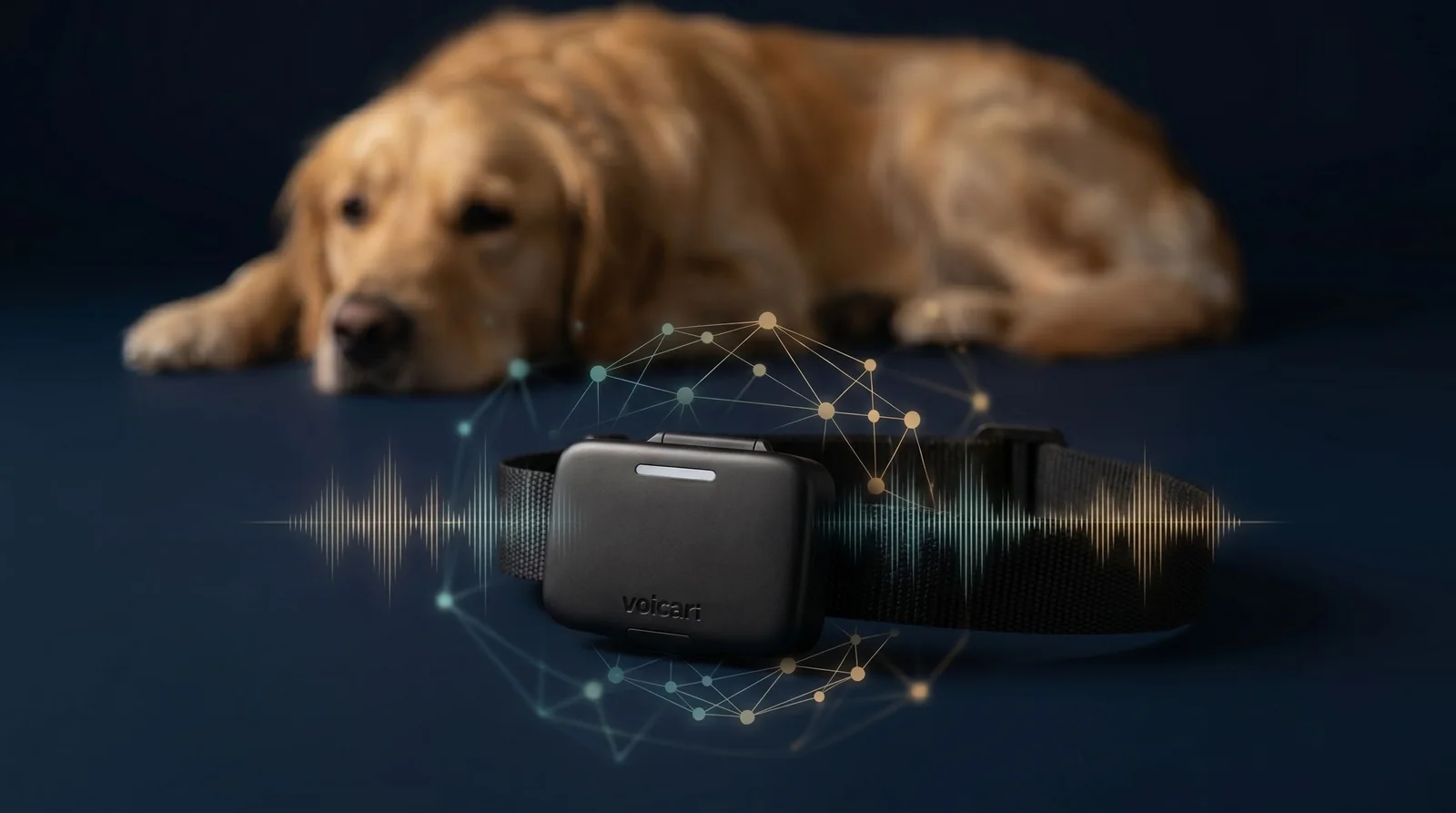
Voicari is an AI-powered smart wearable, a canine emotion wearable. It recognizes vocalizations together with heart rate, respiration and activity and assigns them to one of 24 emotional states, with a timestamp. That way you can see whether your dog settled again after 10 minutes or whether the tension lasted two hours, and whether your training is actually making a difference over days and weeks.
And because timestamps and charts on their own often raise more questions than they answer, you do not even have to piece them together yourself. PetGPT, your personal companion in the Voicari app, reads this data with you and answers all your questions.
Voicari does not make a diagnosis and does not replace training. For persistent or severe cases, the path through a veterinarian or a certified behavior consultant remains the right one. For that, you can simply export your data as a report so your veterinarian can make a more informed decision, since the data can be captured over a longer period with Voicari's built-in export function.
Get Voicari Series 1.0 at the founding price now
Frequently asked questions
How long can a dog be left alone?
That depends heavily on the individual dog, its age and how used to it the dog is. Adult, well-trained dogs can often manage several hours alone, while young dogs and inexperienced alone-stayers need much shorter, slowly increased stretches.
How do I recognize separation anxiety?
Typical signs are barking or whimpering shortly after you leave, destruction at doors or windows, restlessness, accidents indoors despite being house-trained, and refusing food while you are away. The key point is that the pattern is tied to being alone itself, not just to a lack of activity.
Does a second dog help against separation anxiety?
Some dogs are helped by company, others stay stressed anyway, because the anxiety relates to the specific person rather than to being alone as such. A second dog usually does not solve the underlying problem and in some cases can even complicate it.
Can separation anxiety go away again?
Yes, with consistent, patient training separation anxiety improves significantly or disappears entirely in many cases. How quickly that happens depends on the individual dog, the severity of the symptoms and the consistency of the training.
What is Voicari's PetGPT?
PetGPT is the chat companion in the Voicari app. It reads your dog's data and answers your questions about it in a chat. For example, how your dog behaved while you were away.
Is separation anxiety the same as boredom?
No. Boredom usually shows up spread across the day and improves with more activity. Separation anxiety typically begins shortly after you leave and is independent of how much the dog was exercised beforehand.
Are certain breeds more prone to separation anxiety?
There is no reliable, widely accepted ranking of particularly affected breeds. More decisive than breed are the dog's individual history, how much practice being alone it had as a puppy, and how closely it is bonded to a single person.
Curious what your dog is feeling?
Voicari reads vocalizations together with heart rate, respiration and activity to show you how your dog is really doing.
Discover Voicari