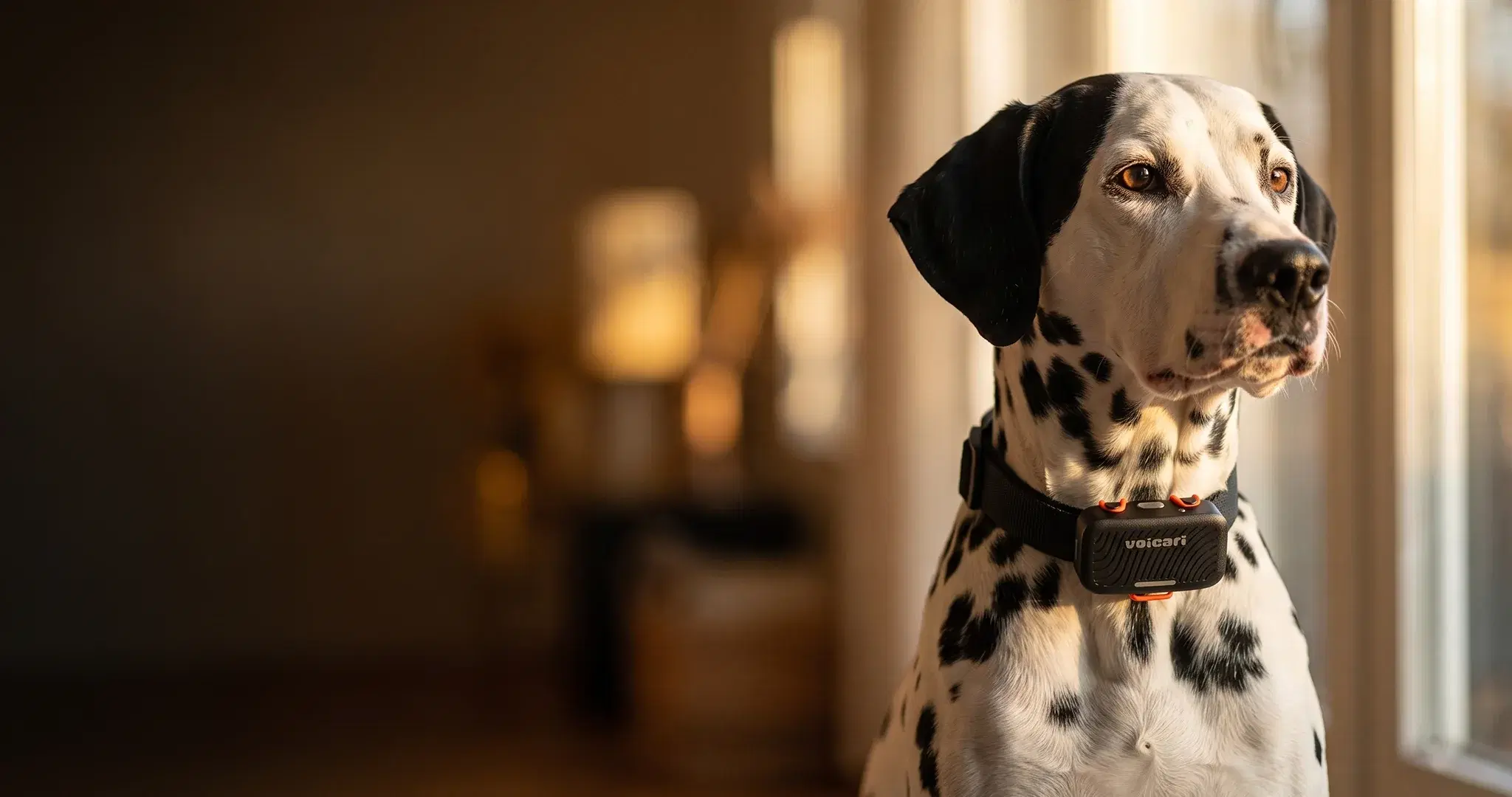
Your dog is lying still, but is he relaxed? How to read your dog's body language, spot stress, and what a dog tracker can show you.
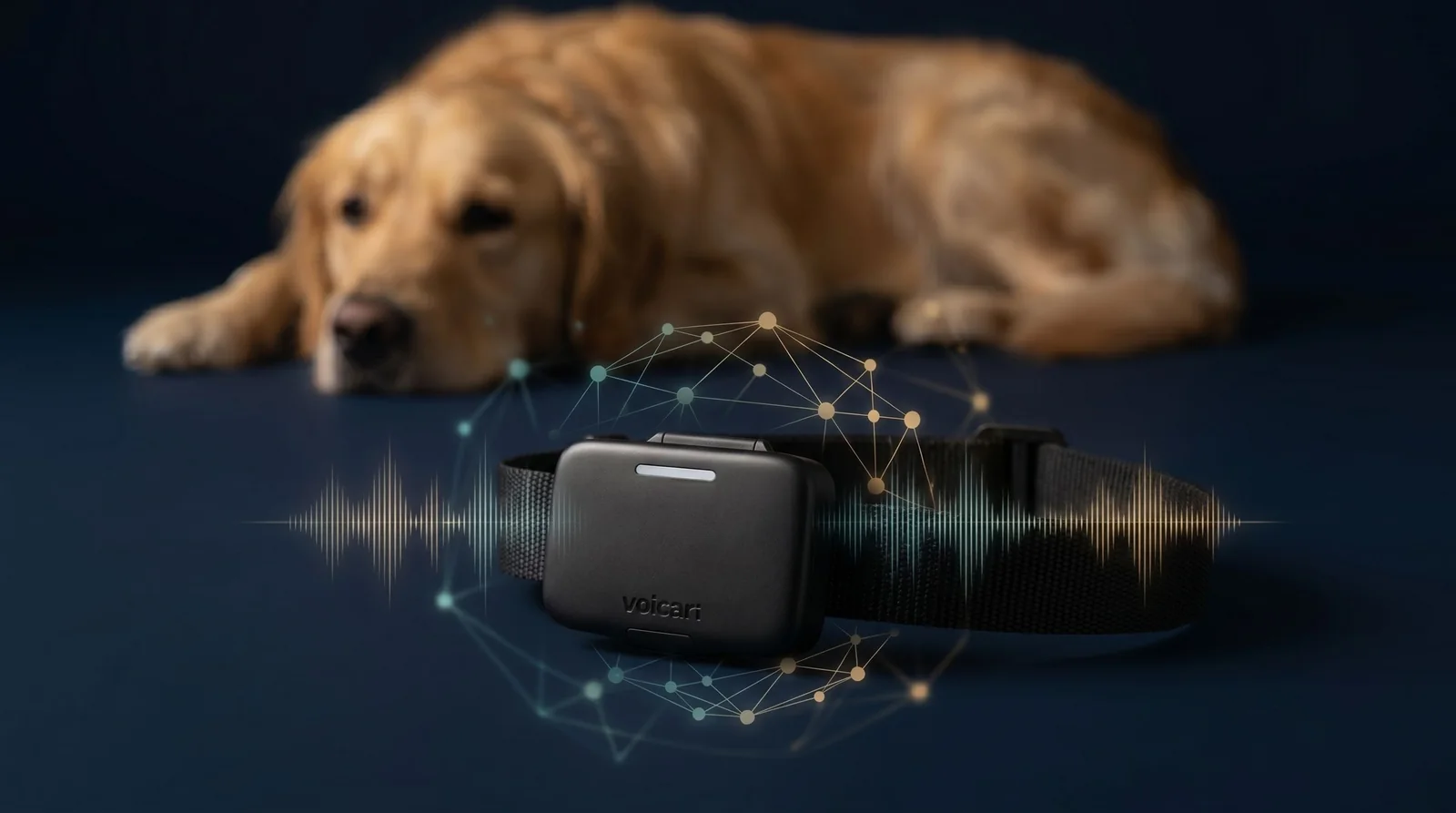
Your dog is lying still in his corner, eyes half closed, not moving. Looks like relaxation. But is it really? Or is he only keeping still because something quite different is going on inside him? Your dog's body language gives it away. The difference rarely lies in movement itself, but in body tension, breathing, and how quickly your dog responds when you speak to him. A relaxed dog has a loose posture. But a dog can also lie still and be tense at the same time, and that is easy to miss. Stress in dogs is not always loud.
This article shows you how to recognize real relaxation in your dog's body language, which signs point more toward stress and quiet tension, and why this distinction goes wrong so often.
Dog body language: how do I recognize real relaxation?
Real relaxation shows in the whole body, not just in the fact that nothing is moving. The muscles are loose, the weight visibly sinks into the ground instead of holding a tense position. The eyes are soft, the lids half lowered, the gaze wanders now and then without fixating. Breathing is even and calm, not shallow or held.
A relaxed dog is also easy to bring out of his rest, in a good way. When you speak to him, he lifts his head, his ears turn toward you, maybe a tail wag or a contented sigh follows. He responds without flinching. This state is your dog's baseline, the one every other state can be measured against.
Stress in dogs: which signs reveal quiet tension?
At first glance, quiet tension looks almost identical, but it gives itself away in the details. The body looks more compact, almost drawn together, instead of lying loosely on the floor. The muscles stay noticeably firm. The eyes are often wide open or fixed, sometimes with the white visible at the edge. Breathing can be shallow and fast even though your dog is barely moving, or it can seem noticeably held.
- A tense rather than loose posture, even when lying down
- A fixed stare or visible white at the edge of the eye
- Shallow, fast breathing for no obvious reason
- A delayed response or none at all when you speak to him
- Retreating to a secluded spot instead of his usual favorite place
If your dog responds to you with a delay, avoids eye contact, or tends to withdraw rather than come closer, that is a hint, not proof. Only the combination of several signals over a period of time turns it into a reliable pattern.
Why is stress in dogs overlooked so often?
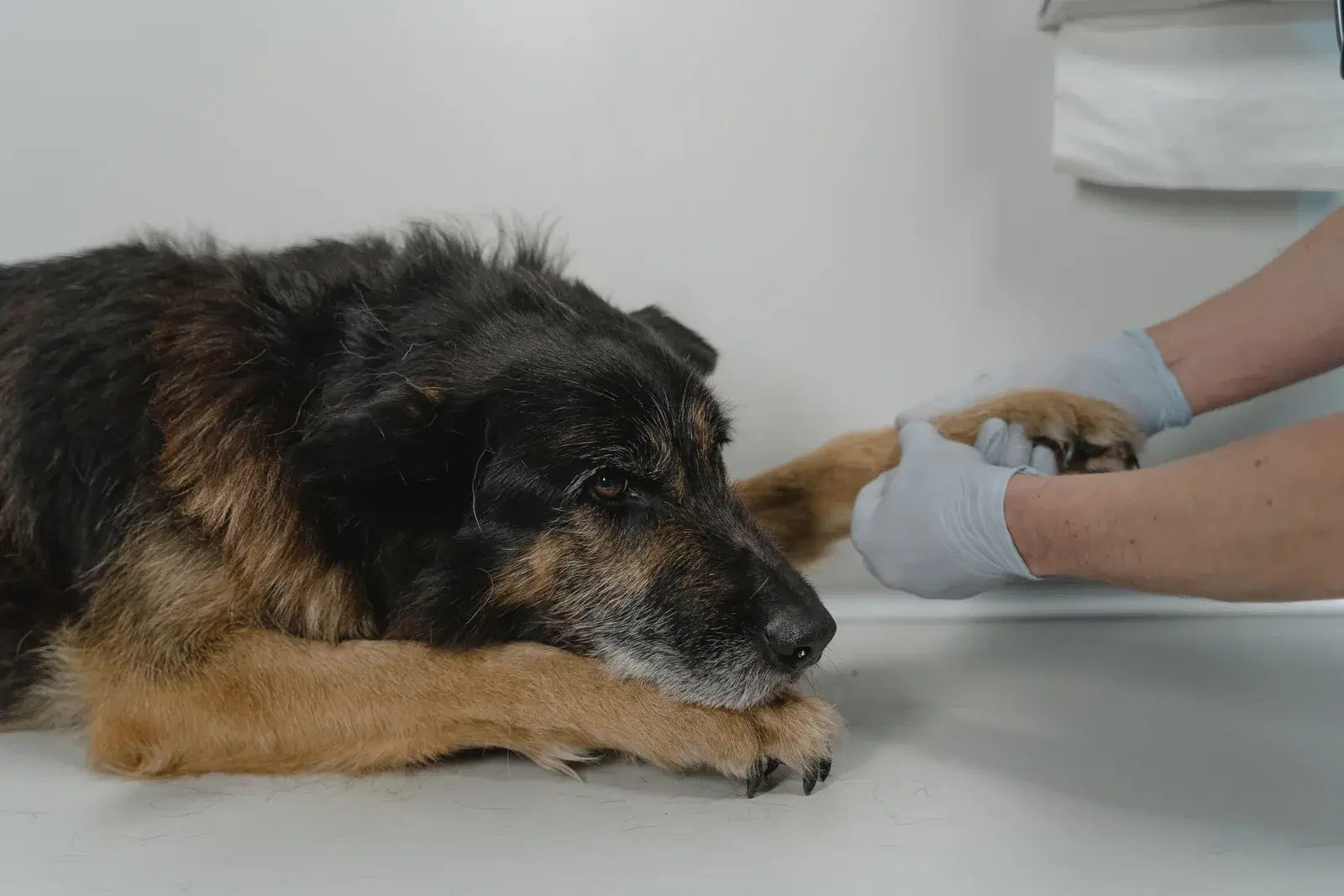
Because to us humans, stillness intuitively looks like relaxation. A dog who is not barking, not panting, and not moving seems content, even when the opposite is true. Dogs also often hide discomfort. Pain in particular tends to become visible late, because reserved behavior is easily mistaken for calm. In a University of Utrecht survey published in the journal PLOS ONE in April 2026, only 53 percent of dog owners rated pain as likely in a case description that contained nothing but quiet signals. You can read more in Dogs hide pain. Here is how to read the quiet signals.
Withdrawal belongs here too. A dog who retreats to a quiet corner after a stressful experience looks, from the outside, exactly like a dog who is simply dozing. The difference lies in what came before and what comes after, not in the moment itself.
An everyday example makes this concrete. After a loud thunderstorm, a dog will sometimes withdraw for a while, lie still, and barely move. From the outside it looks like recovery. But if his body tension stays high and he responds more slowly than usual, he is in fact still in the middle of the tension, just quietly.
This is exactly where observing from the outside reaches its limits. The same goes for many dog trackers. A pure GPS tracker shows you where your dog is. A pure activity tracker counts how much he moves. For a dog lying still, both report the same thing: nothing is happening. Heart rate and respiration, on the other hand, can provide clues the eye misses. You can read how these devices differ in GPS trackers for dogs compared.
See how Voicari tells calm from stress
Relaxed or not? A simple everyday test
A simple test you can do any day helps. Speak to your dog calmly or offer him his favorite toy. A relaxed dog usually responds promptly, curious or happy. If he instead responds with delay, hesitantly, or not at all, it is worth taking a second look at his posture and breathing.
What always matters is the comparison with your dog's usual baseline. A dog who is generally reserved behaves differently from one who normally jumps up right away and today suddenly does not.
More than a dog tracker: how does Voicari recognize stress and relaxation?
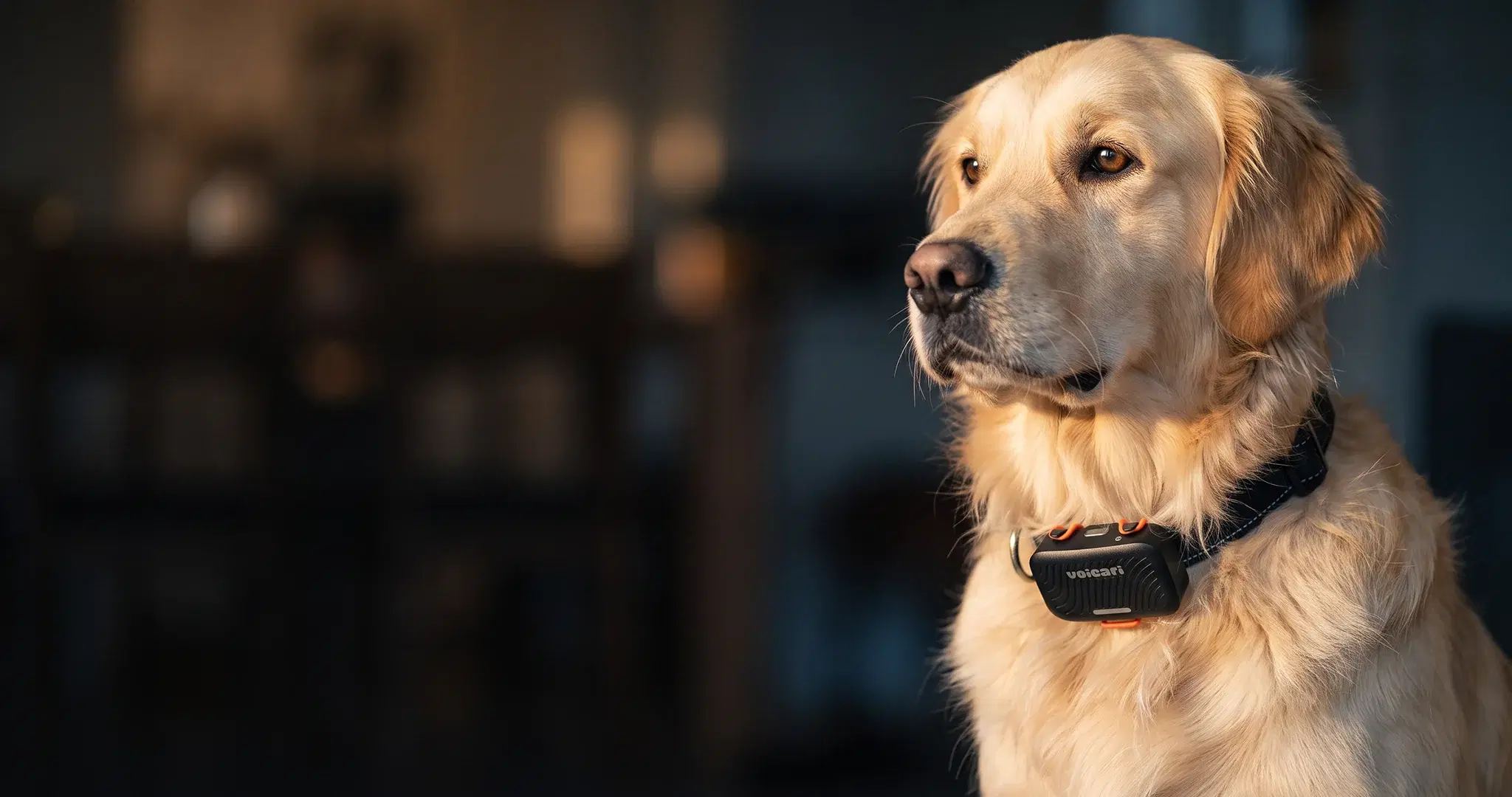
Quiet tension shows hardly any visible movement and often comes without a single sound. That is why the Voicari device does not rely on any one signal. The emotion wearable for dogs combines heart rate, respiration, and activity with your dog's barks and maps them to one of 24 emotional states. These states belong to 7 core emotional families: Happiness/Play, Curiosity/Seeking, Care, Calm/Neutral, Fear, Anger/Rage, and Sadness/Panic/Grief.
Calm/Neutral is a family of its own and your dog's baseline. If he is lying still while his heart rate and respiration drift away from that baseline, the reading can fall into a different family, for example Fear. You see exactly this difference in the app, with a timestamp and a history. It is built on data points from more than 30,000 dogs across over 110 breeds. How the 7 families are structured is explained in the article Reading your dog's emotions.
So for a dog lying still, you get more than a glance from the couch: an ongoing reading you can compare with your own observations.
Heart rate and respiration are wellness insights. The reading gives you continuous observation, not a diagnosis. If your dog seems tensely quiet for a longer time, unusually withdrawn, or his behavior changes suddenly, that belongs in the hands of a vet or a behavior consultant.
Frequently asked questions
How can I tell if my dog is stressed when he is just lying quietly?
Most clearly by body tension, breathing, and how quickly he responds. A relaxed dog is physically loose and responds quickly when spoken to. A dog who is merely quiet but tense looks more compact, breathes more shallowly, and responds with a delay or not at all.
My dog is breathing fast even though he is lying still. Is that stress?
It can be a sign of tension, but it does not have to be. Warmth, exertion, or dreaming also make dogs breathe faster. Pay attention to the rest of his body language and to the pattern over time. If your dog breathes fast persistently or repeatedly for no obvious reason, have a vet look at it.
Is a quiet dog automatically a relaxed dog?
No. Quiet only describes that little is moving on the outside. Relaxation describes an inner state that also shows in muscle tone, breathing, and how he responds.
Can a dog be in pain without me seeing it?
Yes. Dogs often hide discomfort, and pain tends to become visible late, because reserved behavior is easily mistaken for calm. Lasting changes in behavior should therefore always be checked by a vet.
Can a GPS tracker tell whether my dog is relaxed?
A pure GPS tracker cannot. It shows location, an activity tracker shows movement. Whether a dog lying still is relaxed or tense cannot be read from either. Voicari is more than a GPS tracker for dogs: the emotion wearable also maps barks, heart rate, respiration, and activity to emotional states.
What is the Calm/Neutral family in Voicari?
One of the 7 core emotional families into which the Voicari device groups its 24 emotional states. It describes the relaxed resting state, the baseline against which the other states can be measured.
How quickly should a relaxed dog respond when spoken to?
Usually promptly, with a movement of the head or ears, sometimes with a tail wag. A clear delay or no response at all is a hint, not proof, and only becomes meaningful together with other signals.
This article does not replace veterinary advice. If you are worried about your dog's health, please talk to your vet.
Curious what your dog is feeling?
Voicari reads vocalizations together with heart rate, respiration and activity to show you how your dog is really doing.
Discover Voicari